

Light, low and no alcohol descriptors
Demand for low and no alcoholic beverages has been experiencing large growth over recent years. This has seen an increasing number of grape products appear on retail shelves today with claims that they are ‘alcohol free’, ‘zero alcohol’, ‘de-alcoholised’ or even ‘light alcohol’. Many of these terms are defined by law and misuse of them may breach the Australia New Zealand Food Standards Code (Food Standards Code) and mislead consumers.
It is important that beverage producers understand the different requirements that apply to the various ways in which light, low and no alcohol descriptors may be used.
None of the low alcohol descriptors are mandatory, however, if you choose to use one on your label it must comply with any definitions outlined below. Most importantly, a product containing alcohol must not, either expressly or by implication, suggest that the product is a non-alcoholic beverage.
Representations of light, low and no alcohol
In accordance with Standard 1.2.2 of the Food Standards Code, there is a general requirement that a food be labelled sufficiently to indicate the true nature of the food.
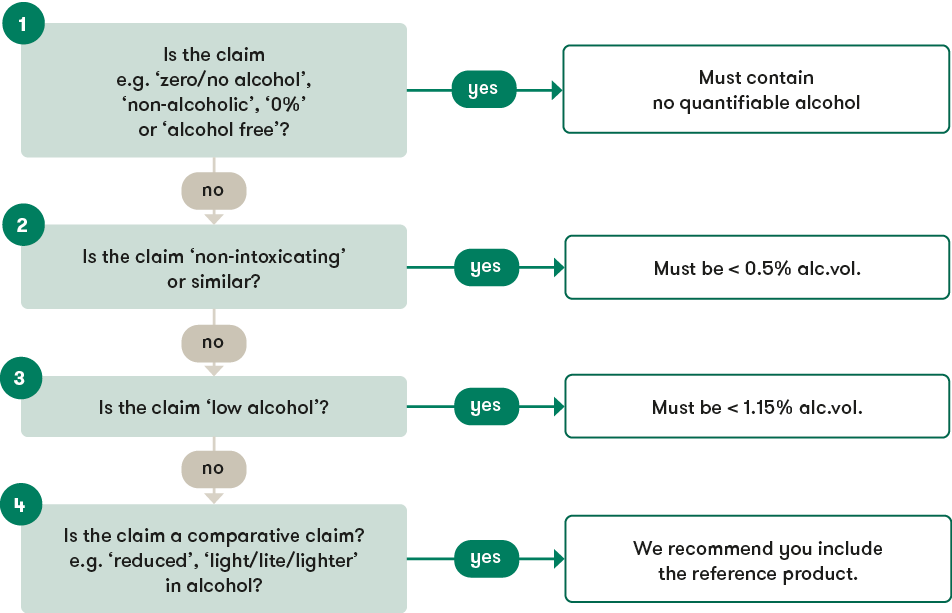
It follows that it would be permissible to describe a product as being ‘zero’, ‘no’, ‘low’, ‘reduced’, ‘de-alcoholised’ wine or wine products. However, there are some traps. Standard 2.7.1 of the Food Standards Code provides criteria for some of these claims including low and no alcohol.
This flow chart will help determine whether your claim meets the requirements.