

Climate change is presenting a number of challenges for the global wine sector. For fruit development, longer and warmer seasons mean that optimal berry sugar is achieved before the flavour and colour profiles are fully developed. This is expected to be an increasing problem as the world continues to warm.
However, the dilemma of whether to harvest grapes when sugars are ready – but colour, flavour and aroma are not – may soon be a thing of the past.
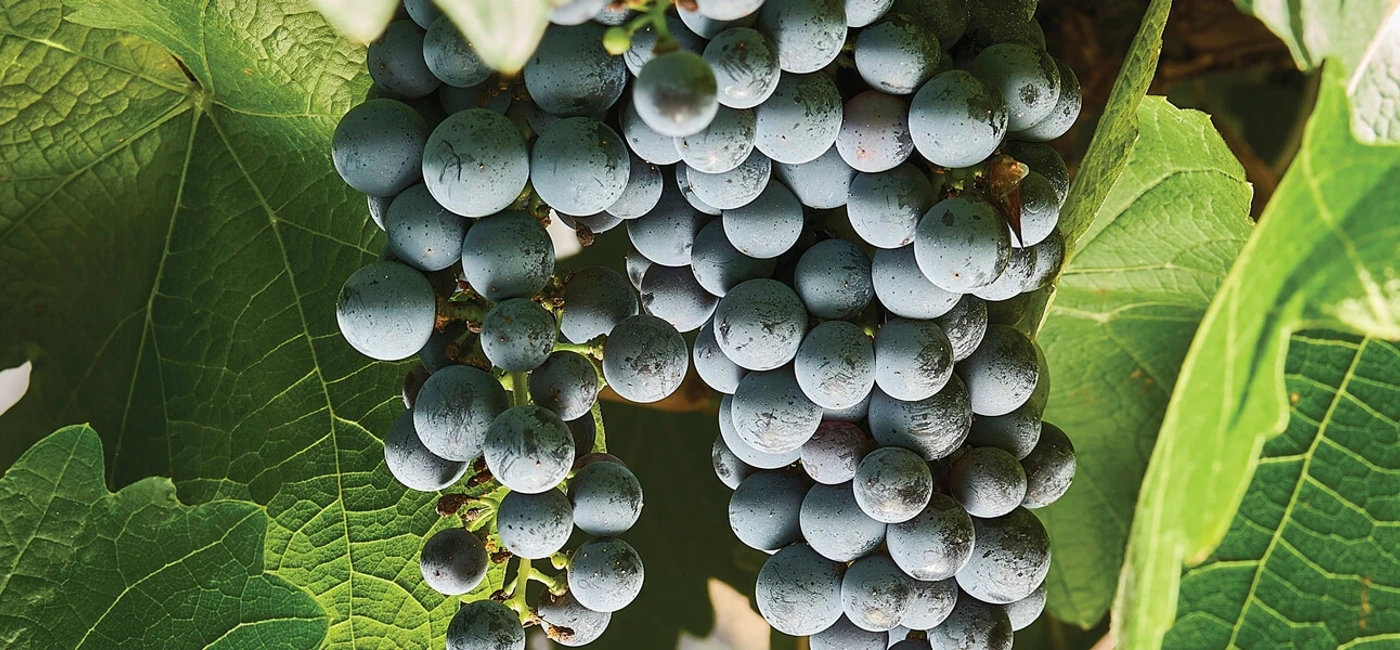
For the first time, researchers have shown that it is possible to increase the flavour potential of Cabernet Sauvignon grapes by slowing down the ripening process with strategies including crop load manipulation and irrigation management.

The results of the study, led by Pietro Previtali, a PhD candidate at the University of Adelaide’s School of Agriculture, Food and Wine (supported with a Wine Australia scholarship), were recently published in the Journal of Agricultural and Food Chemistry.
While earlier research found that techniques such as bunch removal, or intensifying irrigation late in the growing season could alter wine composition, this study examined how the techniques could affect the development of aroma compounds in the actual fruit.
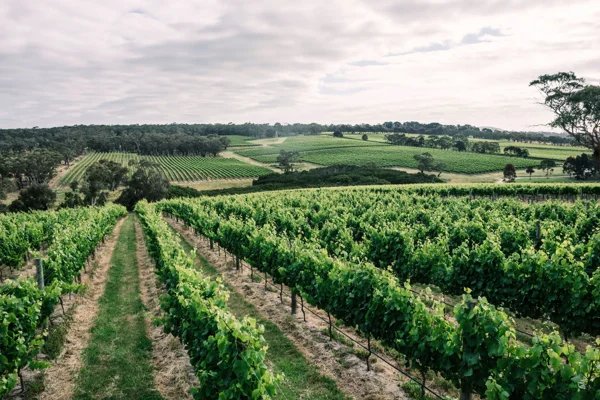
The research team studied Cabernet Sauvignon grapes in a vineyard in California. The vines were either bunch thinned, irrigated late in the growing season – or both. The fruit was then compared with grapes grown in the same block where neither technique was applied.


The team say they used “simple but effective” vineyard practices during the project.
“We removed one bunch per shoot to advance ripening and combined crop removal with late season irrigation to delay ripening,” said Mr Previtali.
“For late season irrigation, we added 50 per cent extra water starting at 20 °Brix until harvest at 26 °Brix, which in total represented an increase of 20 per cent in the amount of water used for the full season. Yield was decreased by 30 per cent in response to bunch thinning.”
A delay in ripening of up to three weeks was achieved in their experiments. However, in terms of increased water usage over this extended period, this may not necessarily be commercially attractive.

The results also show that by delaying sugar accumulation, it is possible to allow flavour (and colour) to accumulate
“At the end of the day, it is about re-establishing the balance between grape sugars, colour and aroma. The conclusion that slower ripening is beneficial for grape quality applies even if other delaying practices are employed. There are several techniques to do so[1] and we are currently working to understand which are more suitable for each environment and growing condition,” said Mr Previtali.
The researchers say the key message for growers and winemakers is that the rate of sugar accumulation in grapes is an important parameter and has an effect on the balance between sugars, colour and aroma compounds. Fast ripening leads to poor colour and aroma development, while slow ripening increases the compounds important for winemaking.

The research is a first small step to more attractive wines, with growers able to monitor the ripening rate as °Brix or °Baume per day (or week) and adjust it accordingly using vineyard management.
“By decoupling sugar accumulation and the development of aroma and colour compounds in Cabernet Sauvignon grapes, we can make more flavourful and richer coloured wines for people to enjoy,” said Mr Previtali.
Whilst these results are from a study in California, they are applicable to wine regions globally with similar climates.
Pietro Previtali was the recipient of a Wine Australia scholarship, which provides top-up funding support, and his research received support from the ARC Training Centre for Innovative Wine Production based at the University of Adelaide and E. & J. Gallow Winery in California.
[1] Research projects at the CSIRO, SARDI and AWRI are investigating more techniques. See further information at https://www.wineaustralia.com/research/projects/managing-and-modelling-vintage-compression ; https://www.wineaustralia.com/research/projects/managing-the-impact-of-vintage-advanceme ; https://www.wineaustralia.com/research/projects/adjusting-grape-berry-ripening-to-suit-a