Salinity
Salinity can reduce vine growth, yields and soil health. Effective management helps prevent salts accumulating in the root zone and protects vineyard productivity.
Salinity in the vineyard

Salinity is one of the most significant long-term risks facing irrigated vineyards. Every irrigation event adds some salt to the soil, and if those salts are not effectively managed they can accumulate in the root zone, reducing vine growth, lowering yields, affecting fruit composition and, in severe cases, causing vine decline. Salinity can also contribute to soil structural problems such as sodicity, reducing water infiltration, root growth and vineyard productivity.
What is salinity?
Salinity refers to the concentration of dissolved salts in water and soil. In Australian vineyards, the most common salts are sodium chloride, sodium carbonate and sodium bicarbonate, although calcium, magnesium, sulphate, boron and other ions may also be present. While some salts, such as those supplied through fertilisers or gypsum, can provide benefits, excessive salt concentrations are harmful to vines and soils.
Salinity is commonly measured using electrical conductivity (EC). The higher the concentration of dissolved salts, the higher the EC reading. Irrigation water is typically tested directly, while soil salinity is commonly measured using a saturated paste extract (ECe) or a 1:5 soil-water extract (EC1:5).
Where do salts come from?
Salts can enter and accumulate within vineyards from a range of sources, including:
- Irrigation water
- Shallow or saline groundwater
- Natural weathering of soil minerals and underlying rock
- Windborne and rainfall-deposited coastal salts
- Fertilisers and soil amendments
- Irrigation system cleaning products such as sodium hypochlorite
- Poor drainage or inadequate leaching that prevents salts from moving below the root zone.
A key concept for growers is the salt load imported through irrigation. Even water that appears relatively fresh contains salt. The more irrigation applied, the more salt is added to the vineyard. Over time, this can result in significant accumulation if insufficient rainfall or leaching occurs.
Assess, manage and monitor
For grape growers and viticulturalists, salinity is not simply a water quality issue. It influences everyday decisions about irrigation scheduling, rootstock selection, soil management, nutrition programs, drainage and vineyard monitoring. The most successful salinity management strategies focus on three principles: assess, manage and monitor.
How does salinity affect grapevines?
Salinity affects vines in two primary ways:
Reduced water uptake (osmotic stress)
As salt concentrations increase around vine roots, it becomes harder for vines to extract water from the soil. Even when moisture is present, vines can experience a form of "chemical drought" because the energy required to take up water increases. This can result in reduced shoot growth, smaller canopies and lower yields.
Toxicity from sodium, chloride and boron
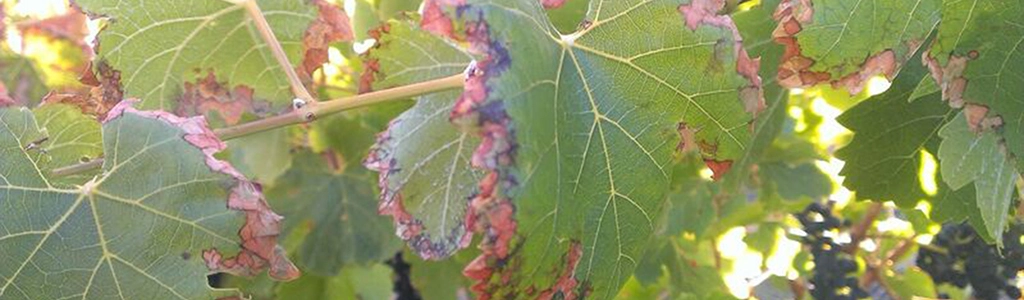
Excess sodium, chloride and boron can accumulate in leaves and fruit, damaging plant tissues and reducing productivity. Symptoms typically include leaf margin burn, yellowing and tissue death. High chloride levels can also affect wine quality and compliance with chloride limits in finished wine.
Practical signs to watch for in the vineyard
Salinity often develops gradually. Common indicators include:
- Reduced shoot growth and vigour
- Smaller, darker leaves
- Leaf tip and margin burn
- Yellowing or bronzing of older leaves
- Increasing variation in vine performance across a block
- Poor inter-row vegetation growth
- Salt-tolerant weed species becoming more prevalent
- White salt crusts on the soil surface
- Poor soil infiltration or water ponding issues.
Visual symptoms are useful warning signs, but should always be supported by soil, water or tissue testing before management changes are made.
Why monitoring matters
A vineyard may not show visible salinity symptoms until productivity has already declined. Regular monitoring enables growers to identify trends before significant impacts occur. Water quality, soil conditions and vine tissue analysis should all form part of a salinity management program.
Best practice monitoring includes:
- Testing irrigation water quality at least several times during the growing season
- Monitoring soil salinity in spring and autumn
- Tracking petiole sodium and chloride levels
- Comparing results over multiple seasons
- Monitoring areas known to have poorer drainage or variable vine performance.
Managing salinity in practice
Prioritise effective leaching
Leaching is the most effective method of reducing root zone salinity. This occurs when significant rainfall or irrigation application moves dissolved salts below the active root zone.
Research indicates that winter and early spring provide the best opportunity to leach accumulated salts because:
- Soils are already wet
- Evaporation losses are low
- Vines are dormant
- Rainfall is generally more effective than summer irrigation for removing salts.
Growers should monitor salinity after significant rainfall events and, if needed, consider supplementary leaching irrigations before budburst.
Avoid excessive soil drying
Deficit irrigation strategies can improve water use efficiency, but they may also increase salt concentrations around vine roots if insufficient leaching occurs. Allowing soils to dry excessively concentrates salts in the remaining soil water and increases vine stress.
Match rootstocks to risk
Rootstocks vary considerably in their tolerance to salinity. Sensitive own-rooted vines can begin experiencing yield reductions when average root zone salinity exceeds approximately 1.8 dS/m (ECe), while more tolerant rootstocks such as 1103 Paulsen can withstand substantially higher salinity before productivity declines.
For vineyards using marginal irrigation water, rootstock selection can be a critical long-term management decision.
Improve soil structure
Poor soil structure can restrict drainage and increase salt accumulation. Practices that improve infiltration and root growth can dramatically improve salinity management outcomes. These include:
- Applying mulch or compost under vine rows
- Reducing unnecessary cultivation
- Managing compaction through ripping where appropriate
- Encouraging biological activity and organic matter accumulation
- Improving inter-row water capture and storage.
- Establishing certain species of cover crops to improve water infiltration and reduce compaction.
Manage sodicity alongside salinity
Salinity and sodicity are closely linked. Irrigation water high in sodium can destabilise soil structure, leading to dispersion, surface sealing, poor infiltration and reduced root development. Gypsum is commonly used to improve soil structure by supplying calcium and reducing sodium-related soil degradation.
Key takeaways for growers
- Every irrigation event adds salt to the vineyard.
- Salinity reduces vine access to water, even when soil moisture appears adequate.
- Chloride and sodium toxicity can reduce vine health, fruit quality and wine quality.
- Winter rainfall is often your most effective salinity management tool.
- Monitoring trends over time is more valuable than relying on a single measurement.
- Rootstock selection, irrigation scheduling and soil structure management all influence vineyard resilience to salinity.
- Prevention is generally easier and more economical than correcting severe salinity problems later.
By integrating regular monitoring with effective irrigation, leaching and soil management practices, growers can minimise salinity impacts and maintain vineyard performance over the long term.
Downloads
Related projects
See all-
In progress
Investigating the effect of shading on grapevine performance and wine quality under vitivoltaic systems
Climate adaptation -
In progress
Prevalence, distribution, and role of Cryptovalsa ampelina in grapevine dieback in Australia
Pests and diseases -
In progress
Grapevine root distribution and implications for nutrient uptake in cover cropped vineyards
Cover crops
Related topics
-
Vineyard variability
Grapegrowers -
Post-harvest grapevine care
Grapegrowers -

Soil health
Grapegrowers -

Irrigation
Grapegrowers -
Mothballing
Grapegrowers -
Tannins
Grapegrowers, Winemakers -
Biodiversity
Grapegrowers -

Undervine management
Grapegrowers -
Vineyard redevelopment
Grapegrowers -
Petiole testing for improved nutrition
Grapegrowers -

Cover crops
Grapegrowers