

Overview
The report provides insights into soil water and nutrient movement and their impact on nutrient reserves and yield. Nitrogen loss was mainly through drainage below the rootzone rather than surface runoff. Fruit generally removed only about half the nitrogen applied, indicating scope to reduce fertiliser inputs and production costs. A bromide tracer study showed soil properties, rather than drip emitter rate, largely governed nitrate movement. Over-winter carbohydrate and nitrogen reserves may indicate canopy growth and yield potential the following season. More recent research extends knowledge and management techniques on this subject.
Knowledge of soil-water movement in vineyards is essential for the management of irrigation, soil nutrition and salinity. This research aimed to determine the extent of water and nutrient losses from vineyards under differing irrigation and fertiliser strategies, the factors that determine those losses and how to measure deep drainage in real-time based on in-situ measurement of water potential gradient as input to general models of soil water movement.
The extent of water and nutrient losses from vineyards was researched in three complementary projects involving:
1. The extension of a multi-vineyard study to determine the typical concentrations of nitrogen in the soil-water solution and runoff from vineyards;
2. A study of solute movement in soil using bromide as a tracer to simulate nitrate and chloride transport under drip emitters; and
3. The use of a dual tube tensiometer and soil hydraulic flow models to determine deep drainage from the rootzone from changes in soil water potential between two points.
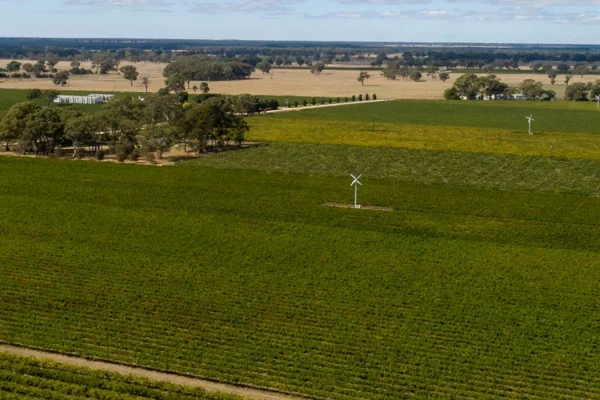
The multi-vineyard field study examined soil nitrogen (N) dynamics in both drip and furrow-irrigated vineyards, on three soil types. Nitrogen concentrations combined with the number of days in which drainage below the rootzone was likely indicated that subsurface pathways represent a potential N export risk from vineyards. The risk of leaching N from vineyards was related to its concentration of the soil-water solution, and fertiliser application and irrigation practices. As grapevines in most vineyards had more than adequate N the study revealed a significant opportunity to reduce the risk of environmental impacts and production costs by reducing applications of N. A web-based irrigation scheduling tool which normalised data from a range of different soil water measuring devices was developed to assist grapegrower participants in this study. That tool was successfully tested by farmers and consultants and led to modification of grower practices for greater efficiency of water use in drip irrigated vineyards. The study identified regional differences in irrigation and fertiliser associated with particular production targets and thus highlighted the need for a regional approach to nitrogen and water management in vineyards.
Abstract
Optimising viticultural resource use for economic and environmental sustainability broadly requires knowledge of the impact of resource use practices, and opportunities to improve them. Research in Theme 4 was thus directed along two streams; one which determined the impact of water and nitrogen use in warm, irrigated inland vineyards and the other which revealed opportunities to use new tools, including remote sensing and spatial technologies to understand and optimise the use of those resources for achieving production and environmental goals. This report describes the four projects that led to those advances.
Downloads
Categories
Irrigation
Vineyard management
Grapevine nutrition